As we approach Sun Street Centers’ 60th Anniversary in 2028, Voices From the Past honors the individuals who helped build and shape our agency from its earliest days. Launching in April 2026, this series will feature one story each month leading up to our anniversary celebration, sharing reflections from former partners, community allies, and past board members whose dedication played a critical role in the growth of Sun Street Centers.
Through personal stories and firsthand accounts, we celebrate their leadership, commitment, and contributions, keeping alive the history, values, and vision that continue to guide our mission today.

Last month in our Voice of the Past history corner, we looked back at Judge Sillman and his ties to Sun Street Centers dating back to the 1980s. This month, we’re sharing a story that stretches just as far into our history, one rooted in family and values that don’t fade with time.
When you talk with Nathen Hughes, it doesn’t take long to understand that Sun Street Centers isn’t just an organization he supports, it’s part of his family story. Long before Nathen and his wife, Nuch, became familiar faces among our supporters, his mother, Sue Hughes, was already giving her time and heart to the agency. Sue served on the Sun Street Centers Board of Directors from 1977 to 1987 and held the role of board secretary from 1982 to 1986. The agency was still taking shape then, and she played an active role in helping it move forward.
Sue was a woman who led by example in every part of her life. She made history as the first woman to buy a Toyota franchise, breaking barriers in an industry where that simply wasn’t common. Nathen grew up alongside that determination. In 1987, he began working with his mom, learning the business firsthand. He stepped away for a short time to pursue other opportunities, but by 1990 he was back, helping open a Hyundai franchise for her. Nathen worked with Sue right up until her passing in 2016.
Those years together went far beyond business. Nathen was always by his mother’s side and naturally became familiar with the philanthropic work she cared so deeply about. Sue supported multiple local nonprofits and believed strongly in giving back to the community she called home. Her involvement with Sun Street Centers came from a very personal place. Substance use was something she had seen up close while watching her own father struggle with alcoholism. As Nathen puts it simply,
“Our family was not different.”
Growing up, conversations around alcohol looked very different than they do today. Nathen remembers a time when heavy drinking was common and drunk driving wasn’t treated with the seriousness it is now.
“It was not considered a big deal, it seemed like everyone was doing it.”
Sue understood the harm behind those attitudes, and that understanding inspired her commitment to organizations like Sun Street Centers that offered real help. After Sue passed away in 2016, Nathen and Nuch continued the work she started. Supporting local causes wasn’t something they had to think twice about, it felt natural.
“It’s a community thing. My wife and I donate to local causes because this is our home.”
Their continued involvement with Sun Street Centers reflects that belief. While it began with his mother’s legacy, Nathen’s connection to Sun Street Centers goes even deeper
“It’s about helping our community, that’s the biggest thing, community.”
Over the years, he has watched the agency grow and evolve from what it was during his mom’s time on the board into what it is today.
“Its grown, it’s huge! I think people started seeing the need. It just took time.”
With that growth, he knows more lives are being touched and more individuals facing substance use disorder are finding support. When Nathen talks about community, it’s with genuine warmth.
“I think of the community as one big family.”
“It gives me a sense of belonging also and it’s a big deal helping other people.”
And at the core of it all is a simple truth: “It’s obviously something that the community needs and it’s a needed resource. People need the help.”
Nathen is honest about how much his mother shaped his path.
“I don’t know if I would be as big of a supporter as I am if it weren’t for my mother. She instilled that value in me.”
There’s little doubt that Sue Hughes would be proud to see how Sun Street Centers has grown and how her son and daughter-in-law continue to stand behind the mission she believed in.
As we reflect on the past through stories like this, we’re reminded that Sun Street Centers has always been built on relationships, families who cared, individuals who stepped forward, and supporters who saw a need and chose to help. Nathen and Nuch Hughes carry that spirit forward every day.
Their story is a powerful reminder that when values are passed down, their impact can last for generations, and our community is stronger because of it.
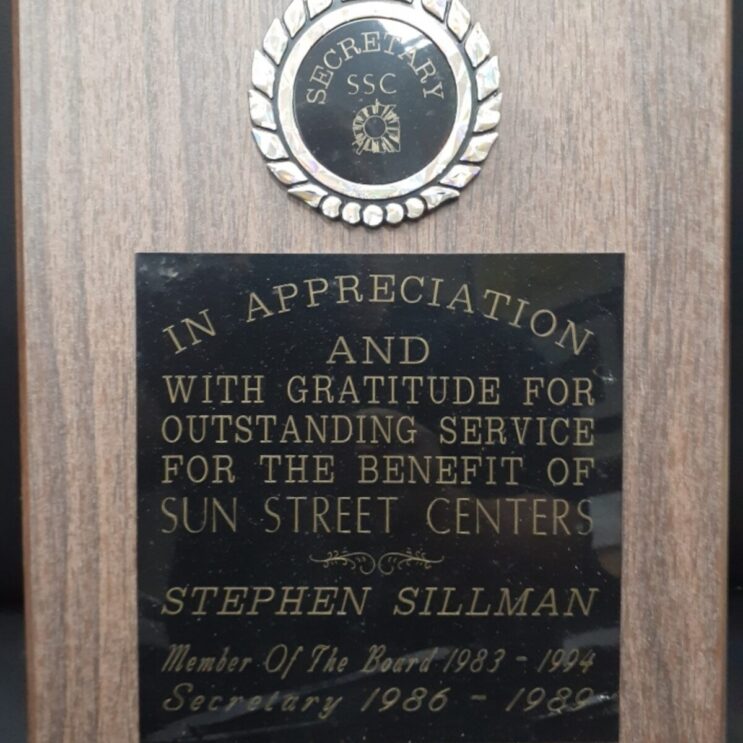
Served on the SSC Board of Directors (1983-1994), Board Secretary (1986-1989)
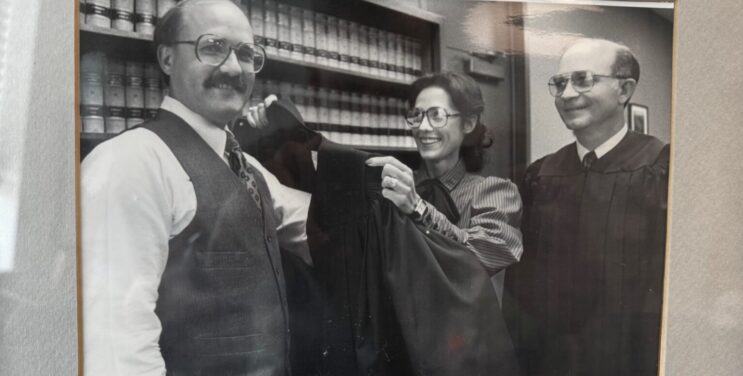
(left to right) Judge Stephen Sillman, Veronica (Stephen’s wife), and Judge Agliano. 1982
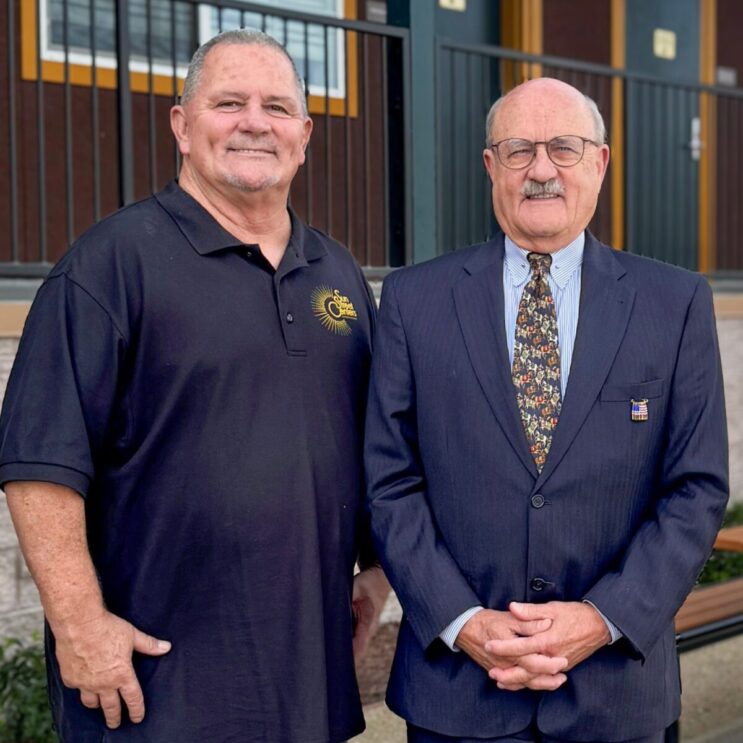
We launch our History Corner with the Honorable Judge Sillman, someone whose influence helped shape the early relationship between the courts and Sun Street Centers. Judge Sillman served on the Sun Street Centers Board of Directors from 1982 to 1989, while also sitting on the Municipal Court bench where he primarily handled alcohol‑related offenses such as DUIs. At the time, he saw firsthand how often alcohol, drugs, and deeply human struggles were at the heart of the cases before him. When Superior Court Judge Edmund James Leach, former President of Sun Street Centers Board of Directors, approached him about joining the board, Judge Sillman didn’t hesitate.
“He came up to me one day and said, ‘we have an opening on the board and think you would be a great fit for the board.’ Came in, got appointed and sat on the board.”
What motivated Judge Sillman to serve wasn’t just public duty, it was the change he witnessed in people’s lives. Serving seven years on the board, he became deeply invested in the mission of Sun Street Centers and the growing partnership between treatment providers and the courts.
“It’s part of what we are supposed to do as a judge, but it’s also what we are supposed to do as a person. To make a difference in other people’s lives.”
During those early years, Sun Street Centers was still finding its footing, just a few buildings supported by the commitment of Martin and Nancy Dodd, along with advocates like Andy Church and Sue Hughes who fought fiercely to keep the program alive. Judge Sillman remembers being a young judge at just 34 years old, overwhelmed by the dedication of experienced fellow board members.
“They were very invested in Sun Street Centers to make sure it was successful.”
At the time, watching the organization grow from the addition of the DUI program to sober living apartments, was what he remembers as a huge success.
“It was Martin and Nancy’s dream to help people in this situation. This whole development of the Sun Street Centers community is pretty amazing!
“I think Martin and Nancy would be so proud to see what they started and where it has grown in its outreach and impact on the community.”
One of the most powerful examples of Judge Sillman’s belief in second chances is the story of Eddie Hathcock, a man who stood before him repeatedly during some of the darkest moments of his life. Eddie was caught in a cycle of drug use, homelessness, theft, and incarceration. He was involved in panhandling, dumpster diving, and stealing to survive withdrawal. Over time, Eddie appeared in Judge Sillman’s courtroom again and again, until November 15, 1999, when everything changed. On that morning, sick from detox and overwhelmed by shame, Eddie was given a final choice: enter treatment or face years in prison. That decision led Eddie to write letters to programs and ultimately to Sun Street Centers. When he was released on April 24, 2000, Frank Gutierrez was there waiting for Eddie, and Eddie’s recovery journey began. Reflecting on the impact of that moment.
“Eddie is really a big part, in my opinion, of how Sun Street Centers should be viewed, how the relationship between the court and Sun Street Centers should be viewed, and how a concerned judge can make a difference in someone’s life if they are willing to make that change.”
Eddie not only rebuilt his life through Sun Street Centers, but he became part of its mission, rising from resident to staff member to Director. Today, he carries deep gratitude for the people who believed in him when he struggled to believe in himself.
“I have nothing but love and respect for the Honorable Judge Sillman. I am not sure if he knows the depth or just how meaningful that was and what he has done for my life.” -Eddie
Judge Sillman often shares a quote in Juvenile Hall and Drug Court, one he felt captured the heart of recovery:
“Nobody can go back and start a new beginning, but anyone can start today and make a new ending.” -Maria Robinson
Through his service on the bench and on the board, Judge Sillman lived that belief, reminding us that real justice includes compassion and courage to open the door to hope.